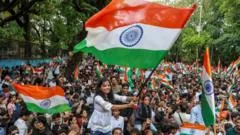
'This is just the start': India's Gen Z protesters force out a minister, but what next? - Published In 12 years of Narendra Modi's rule in India , only one cabinet minister had previously resigned - over allegations of sexual misconduct. So education minister Dharmendra Pradhan's resignation on Saturday, after more than a week of intense street protests, became a defining moment - one many young people celebrated as a rare victory.
In the words of 22-year-old Sakhi, a student activist in Delhi, "for the first time, it felt like we can make things happen through protests". Soon after Pradhan quit, social media seized on an old video of a senior Modi minister boasting that "resignations do not happen in our government", reflecting the confidence of the nationwide youth movement that had demanded his exit. Sakhi says they grew up reading textbooks that spoke about the importance of dissent in a democracy, "but I did not see that around me in the Modi years".
On Instagram, Sakhi posted photos and videos of police assaults and detentions alongside reels mocking officers standing beside them. Many have been viewed millions of times. Sakhi says the government failed to grasp the movement's momentum because it was out of touch with the language and platforms of the protests.
"The government has a hold on mainstream media, Facebook and WhatsApp. But it missed Instagram." The latest education protests erupted in May after NEET, India's biggest medical entrance exam, was cancelled following a question paper leak, forcing nearly two million students to retake the test. More than 20 students died by suicide, with their families blaming the scandal.
The outrage was channelled by the satirical Cockroach Janta Party (CJP), an online campaign launched after India's chief justice likened unemployed people with "fake and bogus degrees" to cockroaches. Its founders staged a sit-in in Delhi, demanding Pradhan's resignation, education reforms and compensation for the bereaved families. Initially, the protest drew little attention.
That changed on 18 July when Delhi police forcibly removed and hospitalised hunger-striking educator Sonam Wangchuk. Two days later, tens of thousands marched on parliament at the CJP's call, triggering a police crackdown. Videos of baton charges, tear gas and pellet guns spread rapidly online, fuelling public anger and swelling the protests instead of suppressing them.
The discontent among India's youth and the courage to voice it on the streets spread to other parts of the country. Somaya Korde was detained at home after urging people online to join a 20 July protest in Mumbai, but went on to attend multiple demonstrations in the days that followed. Pradhan's resignation, says the 26-year-old, "is not the end, but just the beginning".
"For this generation, this is the first time many of us have stepped out to protest. But there are larger issues to talk about, and we will talk about them," she says. Korde, the first woman in her family to graduate in law and a recent civic election candidate, comes from a community officially classified as "backward" because of its historic social and economic disadvantage.







Comentários (0)
Entre ou cadastre-se para comentar.