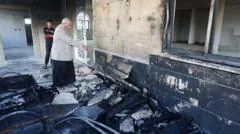
Israeli settlers set fire to mosques, cars and farm land in West Bank, Palestinians say - Published Israeli settlers have set fire to two mosques, as well as cars and agricultural land in the occupied West Bank, Palestinian officials say, as tensions in the territory continue to flare. The latest attacks come two days after a clash between settlers and Palestinians near the village of Tal, which left four Palestinians and two Israelis dead. Both sides accused the other of provoking the violence.
The confrontation has further inflamed the situation in the West Bank, which has seen ever growing violence by extremist settlers against Palestinians, encouraged by far-right elements in the current Israeli government. Palestinian reports say that two villages in the occupied West Bank came under attack from settlers overnight, with cars vandalised, property stolen and hate graffiti spray painted on walls. The mayor of Qusra said that settlers set fire to a mosque that was under construction.
Abdul Azim Wadi said that settlers spray painted graffiti that included the word "revenge" on the walls of the mosque. The Israeli military has said that troops were sent to Qusra and that police would investigate and collect evidence. Palestinian officials say that in a separate incident, settlers set fire to another mosque in the village of Kour and sprayed slogans on its walls.
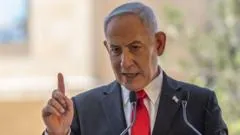
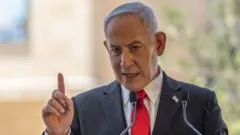
Since the deadly clash on Friday in Tal, Palestinians say that there have been multiple settler attacks on villages across the West Bank. The Israel Defense Forces (IDF) has carried out raids and arrested more than 130 individuals over the weekend in what it has called a "counter-terrorism" operation. The Israeli Prime Minister Benjamin Netanyahu responded to the incident in Tal by vowing to take "powerful action".
That includes the possible demolition of the homes of two of the Palestinians who were allegedly involved. The Palestinian village of Sarra sits next to Tal, with the outpost of Havat Gilad clearly visible on the hill next door. Hanan Turabi speaks to the BBC in tears beside her house - one of six buildings torched by settlers that day, residents said, with more than a dozen others attacked with stones.
Neighbours swept waves of blackened water and ash from the house, as sooty furniture was loaded onto a truck outside. Hanan described seeing crowds of settlers running towards her across the hillside. She said she stayed in her house until the last second before fleeing with four children.
"They came from everywhere," she said. "We tried to escape but they followed us and threw stones." She said she wanted to stay and protect her home but had to choose between her house burning or her family. Kaied Ahmad Turabi, from Miami, was visiting his parents and sister in the village when the attack happened.
He was filmed fighting with settlers on a neighbour's porch. He was just out of hospital when he spoke to the BBC. He had a large black eye, several cuts and bruises, and a wound on his head that he said had needed 12 stitches.
"I worked all my life with Jewish people, but these people... they all had covered faces, all of them had a lot of stuff – sticks, and things in their pockets.




Comentários (0)
Entre ou cadastre-se para comentar.