For generations, the Bwiti religion in Gabon has revered ibogaine, a powerful psychedelic alkaloid extracted from the iboga shrub (Tabernanthe iboga). While ancient African cultures have long held the plant as sacred and understood its spiritual depth, modern science has only recently been exploring its potential as a clinical tool to treat drug addiction. Recent trials and historical accounts suggest ibogaine can reduce withdrawal symptoms and the craving for drugs like heroin and methadone, offering a neurobiological “reset.” Although ibogaine’s medicinal use is still largely unregulated, the global demand for this anti-addiction agent has pushed the African iboga plant into danger.
The shrub takes up to 30 years to mature and yields just a single gram of ibogaine; traditional extraction usually requires uprooting the plant, leading to its destruction. This scarcity has fueled poaching and smuggling, prompting the Gabonese government to prohibit its export. Now, a breakthrough has emerged from the Amazon Rainforest, centered on an undisclosed species.
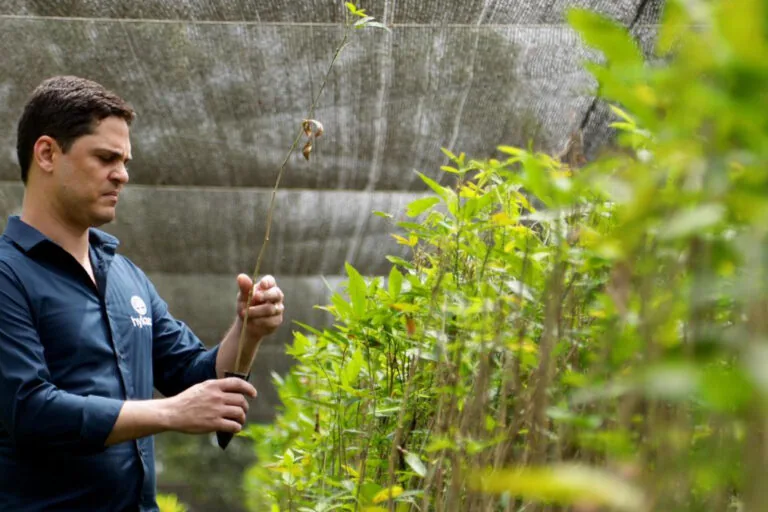
The identity of this plant remains a closely guarded secret by Brazilian researcher Ricardo Marques, who spent nearly two years locating it and studying its ecology. This species contains a chemical precursor that can be transformed into ibogaine using a new, potentially sustainable harvesting method that allows the plant to regenerate after extraction. By keeping the plant’s name a secret while training local families in its collection, Marques says he hopes to create a permanent, ethical supply of ibogaine without repeating the ecological harm seen in Africa.
Up until now, the only…This article was originally published on Mongabay








Comentários (0)
Entre ou cadastre-se para comentar.