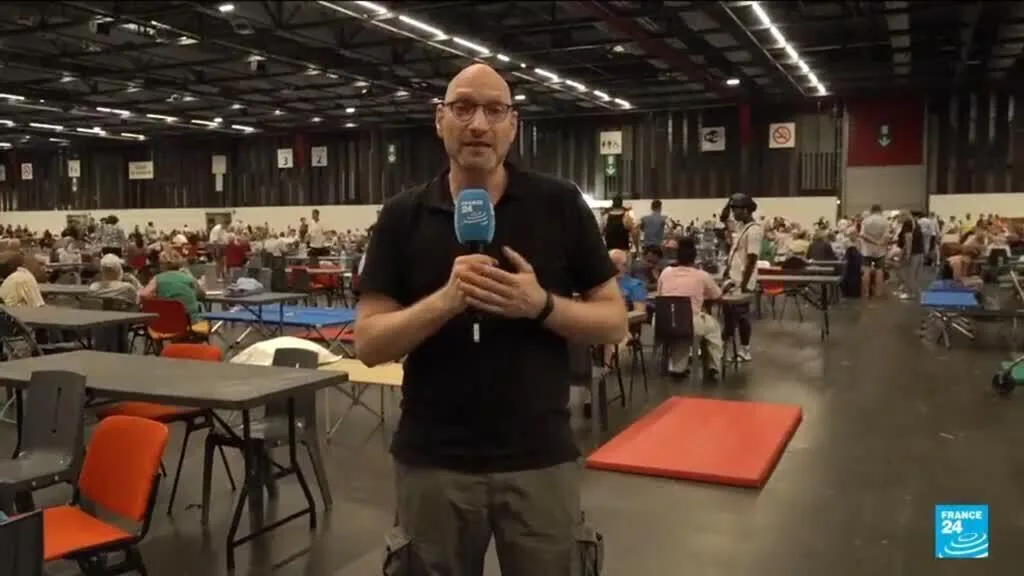
Wildfires are ravaging southern France and spreading into Spain, forcing more than 300,000 people to flee ahead of further expected heatwaves during the week. French President Emmanuel Macron is set to hold a crisis cabinet meeting on Monday, while Spain's Prime Minister Pedro Sanchez will visit areas hit by fires in Valencia, in the East of Spain. The fire, which began in the Southwest of France in Gironde on Wednesday, has burned 42,000 hectares and has forced one of the largest evacuations in France's history, according to French broadcaster France 24 and local news outlets.
The wildfires have also affected 77,000 hectares of the Avila and Toledo areas in Western Madrid. "The situation remains highly unfavorable," France's Interior Minister Laurent Nunez said on X on Saturday, according to a Google translation. "At the start of the night, in Gironde, the fire became extremely virulent and unpredictable again, generating its own wind and spreading erratically toward the Bordeaux metropolitan area.
By the end of the night, it had calmed down somewhat." On Saturday, France's Prime Minister Sébastien Lecornu said the wildfires are a "historic situation" for the country, with nearly 100,000 hectares burned since the beginning of the year – an "unprecedented" level. Meanwhile, French Finance Minister Roland Lescure said the crisis has delivered a blow to the local economy. "It's like a clap of thunder for an area which could have done without this," he told reporters.
Since the start of the disaster, 2,500 firefighters, 1,500 military personnel, and nearly 1,200 police have been deployed to bring the fire under control, Nunez said. In the latest developments, the main government centre for the Bordeaux area known as the Gironde prefecture, said Monday, "the situation remained generally stable during the night from Sunday to Monday, with no major developments to report." The gigantic fire has been labelled an extremely dangerous and rare "pyrocumulonimbus" — a type of fire cloud which generates its own winds and whirlwinds, making it "erratic and unmanageable," Nicolas Braz, a firefighter Captain, told AFP. Artificial landscape exacerbates fires Stefan Doerr, a professor of wildland fire science at Swansea University, said climate change and poor landscape management are contributing to the increasing intensity of the fires.
"Climate change plays a major role in this, and better management certainly means that we should manage the landscape better for not propagating fire through it," Doerr said on CNBC's "Squawk Box Europe." The abandonment of agricultural land in parts of southern Europe, especially in the Mediterranean and parts of Madrid, has allowed flammable grasses, shrubs and dense forests to spread, making fires harder to contain during extreme heat and drought, Doerr said. "And that simply means if we have these extreme weather conditions, these extreme droughts, if there is an ignition, it just becomes much more difficult to fight," Doerr said. Additionally, Doerr told CNBC Europe has been shaped by thousands of years of agriculture and human activity, with many forests now consisting of dense conifer plantations that are more prone to wildfires.








Comentários (0)
Entre ou cadastre-se para comentar.