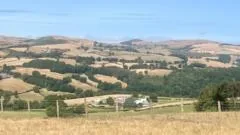
River levels approach all-time low as drought announcement looms - Published River levels are approaching all-time lows across Wales as an imminent "environmental drought" announcement looms for parts of the country. Wales has seen about 5% of the average rainfall for July, after a series of back-to-back heatwaves and a drier than usual April to June. Afonydd Cymru, which represents Wales' rivers trusts, said low river flows were causing "significant problems", killing fish and other wildlife, while farming unions warned of failing crops and heat-stressed livestock.
An announcement is expected later on Thursday from Natural Resources Wales (NRW), who said they were closely monitoring the situation. NRW announced last week that north and south-east Wales were moving to "prolonged dry weather" status - classed as a first step towards drought. It triggered enhanced monitoring and checks of waterways and important sites for wildlife as well as advice for farmers and others who use water from rivers.
Huwel Manley, NRW head of operations for south west Wales, said a number of watercourses were drying up and "even larger rivers are running at lower flows than usual". Rivers classed as exceptionally low include the Clwyd, Alwen, Alyn, Clywedog, Dyfi and Conwy in north Wales as well as the Wye, which runs through parts of mid Wales and south along the border with England. Extra water was being released from reservoirs to support flows on the Clwyd and Wye, as well as the river Severn in the south east and the Dee in north-east Wales.
While there is some rain in the forecast for the weekend, it will take time for river systems to recover, Manley warned. Parts of the country could see the declaration of an "environmental drought", he predicted. This would mean that water shortages in rivers and the ground, as well as dry soils, were having an immediate and detrimental impact on ecosystems, rather than there being a threat to drinking water or household supplies.
But Manley urged the public to be careful with their use of water - for the sake of wildlife and the wider environment. "Maybe have a shower rather than a bath," he said. "And then there are also little things that can be done, such as putting some water out in the garden for mammals and birds." Gail Davies-Walsh, chief executive of Afonydd Cymru, said the country's waterways were already under strain due to pollution.
"The lack of rainfall and decline in river flows is really starting to exacerbate water quality," she said. "We've already had a couple of rivers that have dried up and we're getting reports through of fish that have been killed because of a lack of water." High river temperatures were also leading to concerns for the survival of aquatic life, she added, with water temperatures as high as 28C recorded in the Wye and Usk. Davies-Walsh said she was worried that people's frustrations at water companies over sewage spills and leakages was making them less likely to heed advice about being careful with their use of water.
"I'm looking at social media comments and I totally understand those frustrations," she said. "But we've really got to think about the fact that our water usage is directly impacting the flow in our rivers and directly impacting fish and other wildlife's survival.







Comentários (0)
Entre ou cadastre-se para comentar.