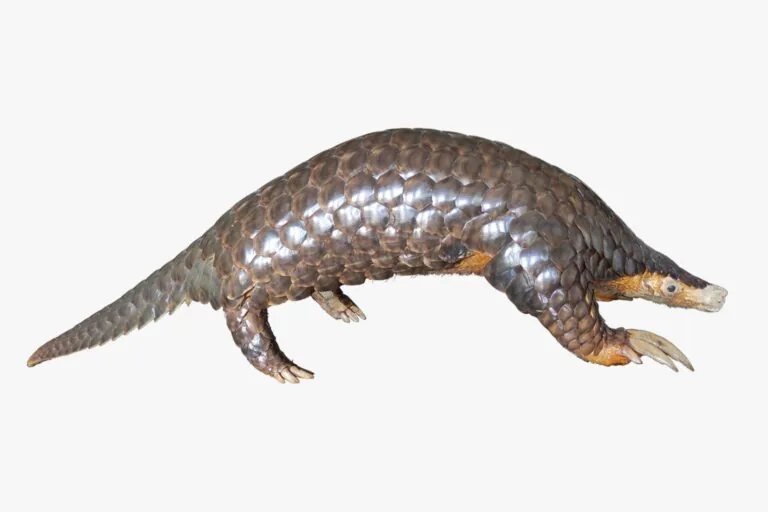
KATHMANDU — The animal Brian Houghton Hodgson saw looked almost like a pangolin, but it didn’t tick all the boxes. It had amor-like scales from head to tail, just as the French zoologist Georges Cuvier had earlier described. But it also had ears and far more scales across its trunk than any recorded species.
The year was 1836. For the 35-year-old British diplomat and pioneering naturalist, who was confined to Nepal’s Kathmandu Valley, this demanded an investigation: Was it a new species, or just an outlier? Convinced he had come across an undescribed species, he gave the animal a name built entirely on those ears, Manis auritus: The Latin auritus translates to “with large ears.” But he hedged it with a backup name, Plurisquamis, “the many-scaled,” in case the ears turned out later to be an unremarkable feature.
Nearly two centuries later, his question finally has a plausible answer. A team of scientists spanning Asia, the Americas and Europe has spent five years building the case that the pangolin Hodgson described in 1836 is in fact a separate species, distinct from the Chinese pangolin (Manis pentadactyla) it had long been lumped together with and the seven other recorded species. Two-week-old Chinese pangolin clinging to mother at Taipei Zoo.
Image courtesy of Suzi Eszterhas/New On Earth: Baby Animals in the Wild/Earth Aware Editions. Their recently published findings also establish its name, now called the Himalayan pangolin, and carry immediate consequences for conservation. Across their Africana and Asian ranges, they’re all endangered,…This article was originally published on Mongabay









Comentários (0)
Entre ou cadastre-se para comentar.