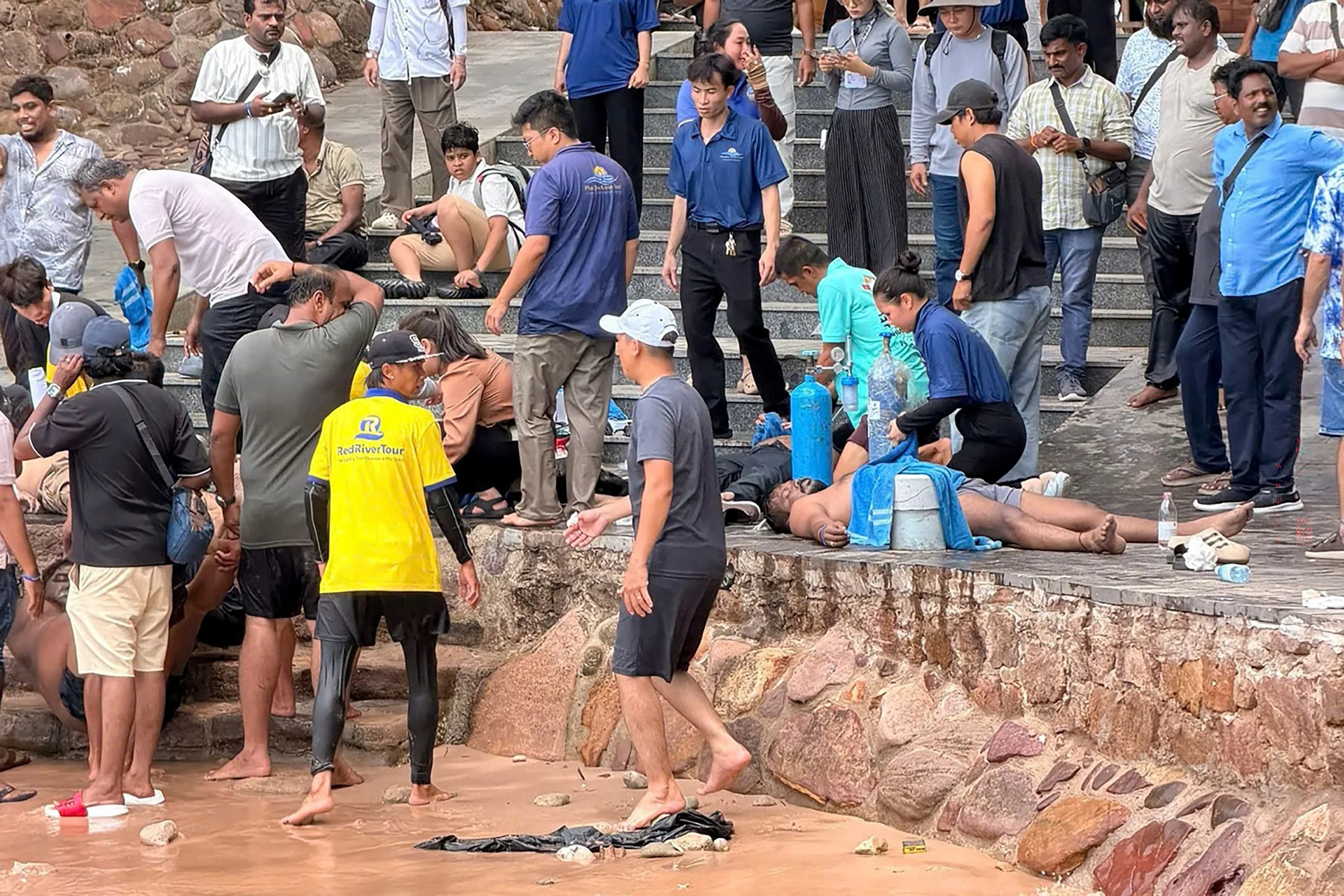
‘Won’t back down’: Indian student protesters return after police crackdown More than 100 students injured in police action against thousands of demonstrators during march on parliament. But students say they aren’t done – just like the cockroaches India’s chief justice compared them to. New Delhi, India – Blood spots on the walls, overturned barricades, shattered mirrors and sandals strewn across the road.
A scarf here, broken glasses and a torn shirt there lie as remnants of the chaos that took over the Indian capital. The heart of New Delhi – Parliament Street and Connaught Place, a colonial-era square – bears the imprint of Monday’s police crackdown on thousands of protesters, most of them students, who had shut down the capital, demanding that Education Minister Dharmendra Pradhan resign. A swarm of protesters reached parliament’s doorstep before retreating as the police tear-gassed them.
More than 100 students were injured. “I still cannot believe my eyes that I’m in Delhi,” said Anshul Dev, an 18-year-old who grew up in the capital. “Part of it is because tear gas still stings,” he added, bursting into laughter with his group of friends.
One of them had both legs bandaged. “This government, whom our elders voted to power, is treating us like terrorists and criminals,” Dev said. “This is our country, and we are reclaiming it from their hateful politics.
We are here to break the spell.” Anger among India’s youth, the world’s largest Gen Z cohort, has been simmering for the past two months over a string of compromised entrance exams that affected millions of students. In some cases, exam papers were leaked; in others, students who sought copies of their answer scripts found that they had been wrongly graded. More than 20 students died by suicide, many citing the paper leaks.
Prime Minister Narendra Modi has not addressed the protests, even as he appeared smiling on Monday in parliament, barely metres away from demonstrators at one point. Analysts said the student protests face formidable obstacles before they can extract concessions from Modi’s government. Yet the protests, the government’s refusal to hold any of its own accountable and the crackdown have also embellished a charge that the prime minister has long faced from critics and opposition parties – that although he is elected democratically, he behaves like an autocrat.
‘Protests will continue’ After dark on Monday, Abhijeet Dipke – the leader of the Cockroach Janta Party (CJP), a political pressure group that called the march – returned to a torn-down stage at the CJP’s main protest site near Jantar Mantar, an 18th-century observatory that is now an important location for protests. “This barbaric Delhi police has beaten up our students and comrades. We are heartbroken,” he said, addressing about 2,000 protesters who stayed back after the crackdown.
“We will continue to resist and demand accountability from the government. We will not back down until Dharmendra Pradhan resigns.” Dipke told the protesters that the Delhi police “brutally cracked down to crush our hopes” that Pradhan would resign. “It was only our first call to march,” he said.






Comentários (0)
Entre ou cadastre-se para comentar.