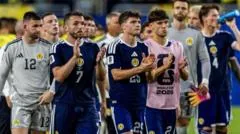
Why the new Scotland head coach has a tricky task - Published When the Scottish FA's new chief football officer Craig Mulholland starts his job this week, he faces a considerable challenge. Replacing Steve Clarke was not on anyone at the SFA's agenda a week ago, having signed him up for another four years before the World Cup. His shock resignation leaves a massive hole, and there are other issues as the men's national team considers its future at the end of the successful Clarke era.
The core of this squad who qualified for three major tournaments are hitting their 30s, while young Scottish players are struggling for game time. So what is a new head coach walking into? And how big will Scotland's transition be?
Core group 'not finished' Clarke was emphatic in his exit interview with the SFA that the core he developed over his seven-year spell are "not finished yet". With Euro 2028 only two years away and a favourable route through qualifying due to host status, this squad can surely go again to a fourth major finals - particularly given the expertise they have gained in qualifying campaigns. However, Scotland were one of the oldest squads at the 2026 World Cup and assembled the most experienced group in their history to try to get into the knockout stage.
Of the team that started the defeat by Brazil, six were at least 30. Of the five that weren't, two were 29. Premier League players Andy Robertson, John McGinn and Ryan Christie are all past 30, while Scott McTominay is 29.
They might well have a lot more to give, but the next head coach's remit will also be to bridge the transition to the next generation. "Going into this tournament I think we had just about a thousand caps in the squad, which is good experience at international level," Clarke said. "We need to make sure the next generation learn from this core group and they can carry us into the future tournaments.
That's my hope and wish. "There are a number of younger players in the squad now who will become the next core group. They should learn from the senior players that I've been lucky enough to work with." - Harsh reality behind Scotland fans' calls for Moyes & Postecoglou - Published1 day ago - Clarke says standing down 'easy' decision after World Cup exit - Published1 day ago - Clarke leaves strong Scotland legacy but exit brings sense of relief - Published2 days ago Problem positions set up challenge How, though, does a new head coach manage that amid the demand for results?
There needs to be plenty of young players to choose from in positions across the pitch with the requisite ability and experience. While Lewis Ferguson, Billy Gilmour, Tyler Fletcher and Lennon Miller give Scotland hope they can continue with a strong midfield in the coming years, other positions have glaring issues. At goalkeeper, Angus Gunn, Craig Gordon and Liam Kelly were picked in the World Cup squad despite playing very little first-team football last season.
If senior goalkeepers are struggling for game time, where are the next slate of Scottish shot-stoppers coming from? At centre-back there is a similar problem, while Ben Gannon-Doak has carried the burden of adding pace to Scotland's attack for two years until the breakthrough of Findlay Curtis this season.



Comentários (0)
Entre ou cadastre-se para comentar.