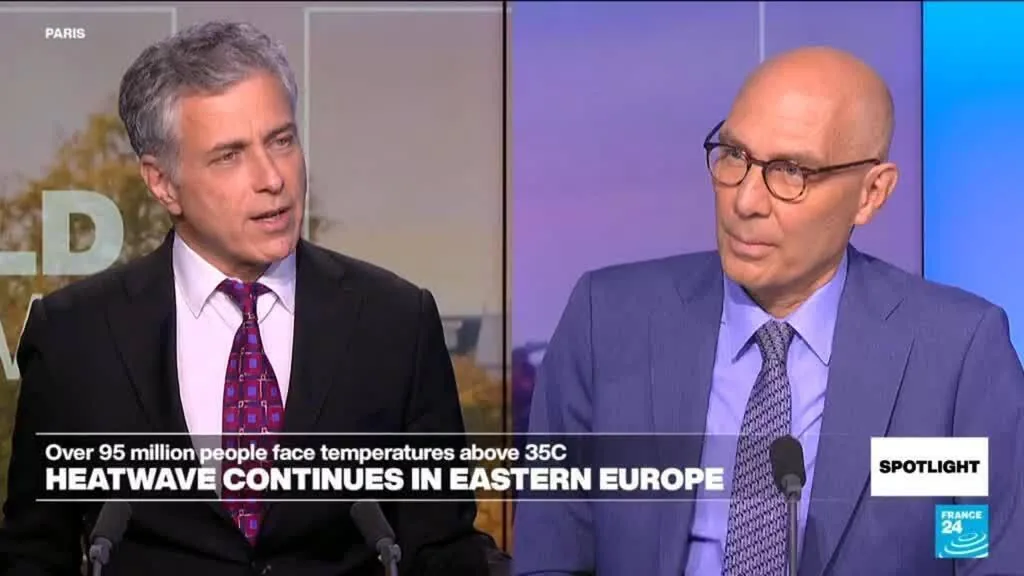
UN's Volker Türk: 'We must see in the other a human being, and not dehumanize migrants and refugees' To display this content from YouTube, you must enable advertisement tracking and audience measurement. One of your browser extensions seems to be blocking the video player from loading. To watch this content, you may need to disable it on this site.
Issued on: François Picard is pleased to welcome Volker Türk, United Nations High Commissioner for Human Rights. In this wide ranging interview, Volker Türk presents a coherent vision of human rights as the essential framework through which to understand some of the defining global challenges of the twenty first century. Rather than treating migration, climate change, nationality, international law and institutional governance as separate policy questions, Türk argues that they are deeply interconnected manifestations of a broader crisis of solidarity, legality and political responsibility.
He consistently shifts the discussion away from short-term political pressures and towards universal principles grounded in international law, empirical evidence and shared humanity. Whether discussing anti-immigrant sentiment, the treatment of asylum seekers, climate responsibility or the weakening of multilateral institutions, Türk returns to a recurring proposition: societies become more stable, not less, when they resist dehumanisation and uphold universal rights. At the same time, he warns that political polarisation, environmental degradation and the erosion of international institutions risk undermining the very legal and moral architecture designed to protect future generations.





Comentários (0)
Entre ou cadastre-se para comentar.