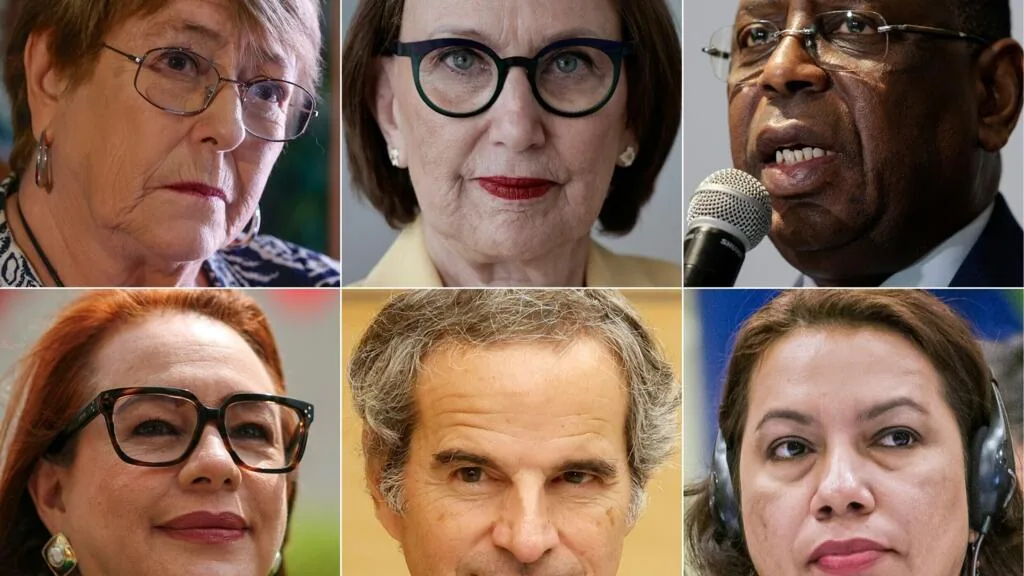
UN leadership candidates outline visions ahead of secretary-general race Six candidates vying to become the next UN secretary-general presented their visions for the organisation on Thursday, as the United Nations faces a financial and confidence crisis ahead of a selection process that will determine its leadership from January 2027. The six candidates to lead the United Nations on Thursday convened to offer their visions for the world body, one week before the formal start of a selection process crucial to an organisation in deep crisis. With the campaign struggling to generate real enthusiasm, the hopefuls faced 90 minutes of questions from diplomats, UN employees and civil society representatives at an event in the huge General Assembly Hall, broadcast by Bloomberg.
Chile's Michelle Bachelet, Ecuador's Maria Fernanda Espinosa, Rafael Grossi of Argentina, Costa Rican Rebeca Grynspan, Guyana's Carolyn Rodrigues-Birkett and Macky Sall of Senegal are all in the running to succeed outgoing Secretary-General Antonio Guterres. The first question came from one of the two moderators of the debate: "What makes you the best person to be secretary-general?" Each candidate was given two minutes to respond. To display this content from YouTube, you must enable advertisement tracking and audience measurement.
One of your browser extensions seems to be blocking the video player from loading. To watch this content, you may need to disable it on this site. "This UN town hall will ...
provide a rare opportunity to engage with the ideas, priorities and leadership vision of the candidates for one of the world's most important positions," General Assembly President Annalena Baerbock said. "In an increasingly fragmented world, the United Nations needs not only an exceptional chief administrator who will make the organisation fit for the 21st century but also the leadership and integrity of someone willing to vigorously defend the UN Charter and all its three pillars," she added. The United Nations is facing a profound financial and confidence crisis, with US President Donald Trump's administration accusing it of spending recklessly, spreading itself too thin and failing to deliver satisfactory results.
The United States is therefore demanding a return to the organisation's fundamental purposes of peace and security, while other states stress the equal importance of its other two pillars: human rights and development. No missteps Against this backdrop, "the race does seem short on energy" compared with the livelier 2016 campaign, which had "more candidates and lots of intrigue" before Guterres was ultimately selected, International Crisis Group analyst Richard Gowan told AFP. "This time around, everyone agrees that the race is incredibly important for the future of the UN, but the contest itself has been quite cautious," he added.
"There is a sense that the candidates are treading carefully to avoid offending the US and other veto powers." The candidates have already faced three hours of questioning each from representatives of the 193 UN member states. Most stressed the need to continue the organisation's ongoing reforms to make it more efficient, as well as the importance of greater involvement by the secretary-general in peace efforts around the world.




Comentários (0)
Entre ou cadastre-se para comentar.