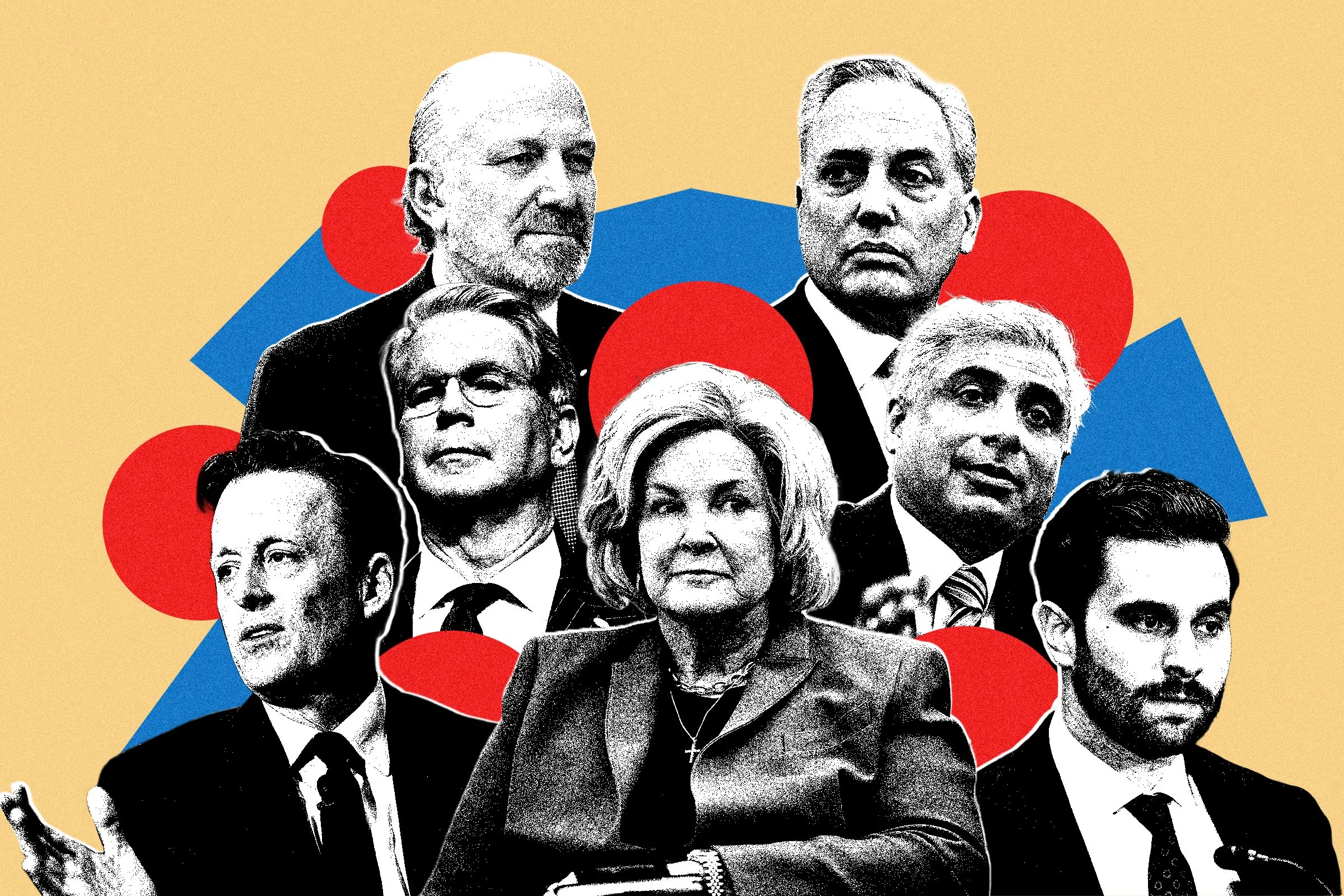
As China’s open-weight AI models become increasingly powerful, the Trump administration is relying on a small group of officials to decide whether and what restrictions should be imposed. The group is scattered across several departments and agencies in Washington—and they all have differing views on the best way to keep the US ahead in the race against China. “It’s not an argument with two sides, it’s an argument with ten sides,” one senior White House official tells WIRED about the state of affairs.
With little interagency coordination in the administration, policy will almost certainly end up being set by the people with the most influence with the president. In an effort to map the forces at play, here’s a list of the current power brokers involved in the race to regulate AI. Commerce Secretary Howard Lutnick Howard Lutnick has increasingly emerged as an influential part of the intra-administration split over AI, in part because it oversees export controls through the Bureau of Industry and Security.
Lutnick, according to people familiar, has contemplated ways to create incentives for top US labs to create their own open-weight models to counterbalance China, and he has spoken with leaders at a number of AI labs. On Thursday, Lutnick played down the capabilities of Moonshot AI’s Kimi K3 model, writing in an X post that his team found it performed worse than leading US frontier models in key benchmark tests. Lutnick appears to be straddling a middle ground on regulation.
He imposed export controls on Anthropic to bring them to heel—but has been more freewheeling than others in the White House. Arvind Raman, Acting Director, CAISI Arvind Raman has become Lutnick’s top deputy as the acting chief at the Center for AI Standards and Innovation, which sits inside the Commerce Department and serves as the industry’s primary point of contact with the government. He assumed the job last week after his predecessor, Chris Fall, abruptly resigned after spending weeks trying to get Anthropic to add stronger safeguards to prevent jailbreaks of its most powerful Fable 5 model.
CAISI staff were in meetings with Anthropic’s technical teams for weeks as both sides hammered out new safeguards that were deemed strong enough for Fable 5 to be brought back online, WIRED previously reported. National Cyber Director Sean Cairncross Sean Cairncross has taken a more hardline approach towards Chinese AI labs. Cairncross has an outsized role in potential attempts to regulate Chinese AI, and he is empowered at the White House to develop a policy to counter the potential national security risks of AI.
He helped put together President Donald Trump’s June 2 executive order that laid out a framework to assess the most powerful AI models. A former political campaign lawyer who most recently was at the Republican National Committee, Cairncross lacks any tech or AI experience. But current and former staff credit him with trying to grapple with the hard national security problems posed by AI, and allowing his staff to work without micromanaging every problem in a manner a tech software engineer might.
In particular, Cairncross and his chief of staff, Lara Smith, have been focused on curbing Chinese labs from training their models off the backs of top US models in a practice called distillation.




Comentários (0)
Entre ou cadastre-se para comentar.