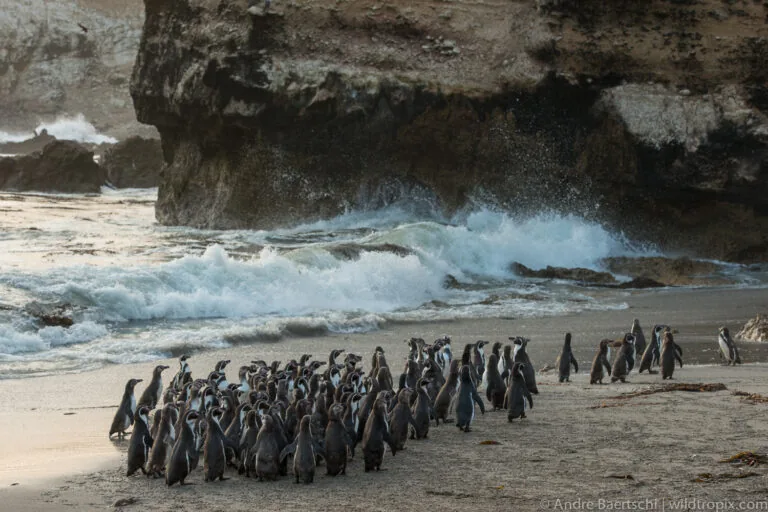
SAN JUAN DE MARCONA, Peru — First, there was the H5N1 avian influenza of 2022, then El Niño arrived in 2023, disrupting coastal waters and fish availability. For Peru’s Humboldt penguins, the only species of penguins that breeds in the country, the burden was too heavy: Its population dropped by two-thirds between 2022 and 2025. Still recovering, the species is now facing a super El Niño that could further undermine its future.
In early June, the Secretary-General of the United Nations, António Guterres, warned: “The science is clear: El Niño is arriving on our doorstep in the coming months with 90% certainty. The world must treat it as the urgent climate warning it is. El Niño conditions will pour fuel on the fire of a warming world.
Impacts will hit even harder, travel even farther, and cross borders with devastating speed.” Scientists studying the Humboldt penguins (Spheniscus humboldti) in Peru say that they are already feeling the impact of the 2026 El Niño as warmer coastal waters drive the cold current carrying the main prey fish, Peruvian anchovy (Engraulis ringens) or anchoveta, deeper and further offshore. That means the penguins and other seabirds are forced to undertake longer fishing trips to get enough food to breed or feed chicks. Scientists studying El Niño say the gaps between the events are getting smaller and the effects are more unpredictable.
“Climate change is driving more frequent and more severe El Niño events,” Andres Lescano, director of Clima, the Latin American Center of…This article was originally published on Mongabay







Comentários (0)
Entre ou cadastre-se para comentar.