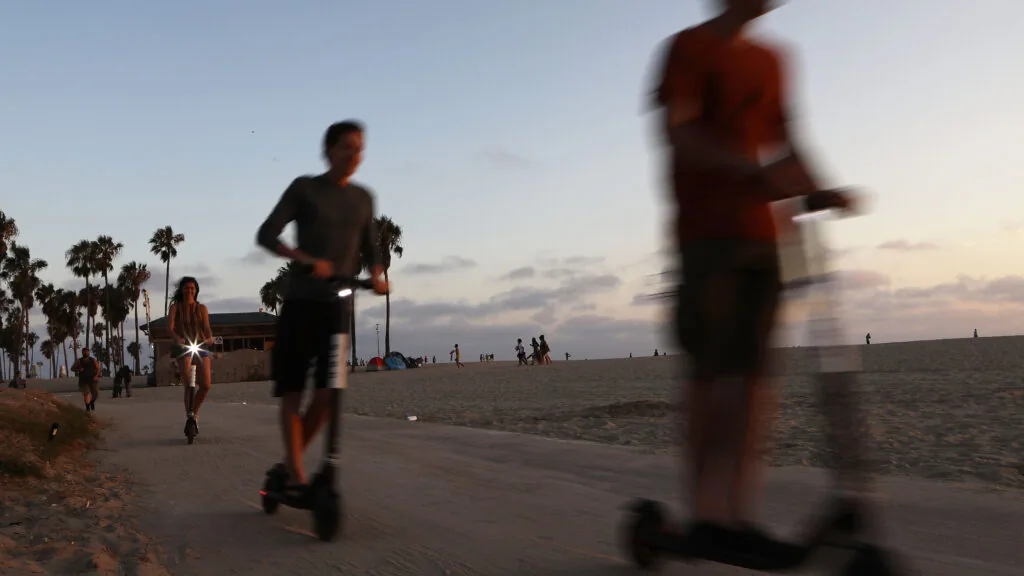
When we were children, it wasn’t unusual to hear about a kid wiping out on a bike, skateboard, or roller skates and coming home with scrapes, bruises, and occasionally broken bones that needed to be fixed. While painful, those injuries generally matched the speed and physics of childhood play and rarely led to permanent injuries. However, now, with the increasing prevalence of electric bicycles and scooters, known as e-bikes and e-scooters, the equation has changed for children and teens.
While caring for children in the orthopedic department at a prominent children’s hospital, we’ve noticed a rapid increase in e-bike and e-scooter use among children and teens, and a corresponding rise in serious injuries. These motorized devices accelerate and travel faster than traditional bikes and scooters, leaving less time for kids to react and generating much greater impact when things go wrong. As a result, we see more accidents with severe and life-threatening injuries.
To be clear: E-bikes and e-scooters are not villains. For many, they provide an environmentally friendly way to commute, run errands, or extend mobility. Our concern is specific to children and teens because the evidence increasingly suggests that we’ve created a perfect storm: powerful devices, widespread availability, and persuasive marketing targeted at brains that are not yet built for risk management.
Emergency departments across America report dramatic increases in serious injuries from e-bikes and e-scooters. Recently our team analyzed data from the National Electronic Injury Surveillance System database from 2020 to 2021 to assess the injury risk associated with the use of e-scooters among those under 18. Over the two-year study period, U.S.
emergency departments reported 13,557 injuries related to e-scooters among children. The number of injuries rose from 5,012 in 2020 to 8,545 in 2021. That’s an increase of 71% in just one year.
That’s particularly concerning because unlike many traditional playground or sports-related injuries, high-speed e-bike and e-scooter accidents can create multiple traumas. With conventional bikes and scooters, we typically saw life-or limb-threatening injuries only when patients were struck by a car. But with street-legal e-bikes reaching up to 28 mph, and personal e-scooters ranging from 15 mph to 50 mph, collisions with cars are more common.
Even isolated crashes now produce injury patterns resembling those seen when children were hit by cars. This includes complex fractures, concussions, and even amputations. When a child manages to avoid catastrophic harm, recovery can still mean surgery, months out of school, and potentially lifelong mental health issues.
This is where childhood development matters, not just mechanics. The brain’s reward and emotional systems develop earlier than the executive function centers that provide impulse control, and this imbalance peaks during the adolescent years. This offers one possible explanation for teenage risk-taking behavior and susceptibility to peer influence.
This combination doesn’t mean that teens are inherently reckless. However, their brains are not wired for adult-level impulse control and risk-management decisions.









Comentários (0)
Entre ou cadastre-se para comentar.