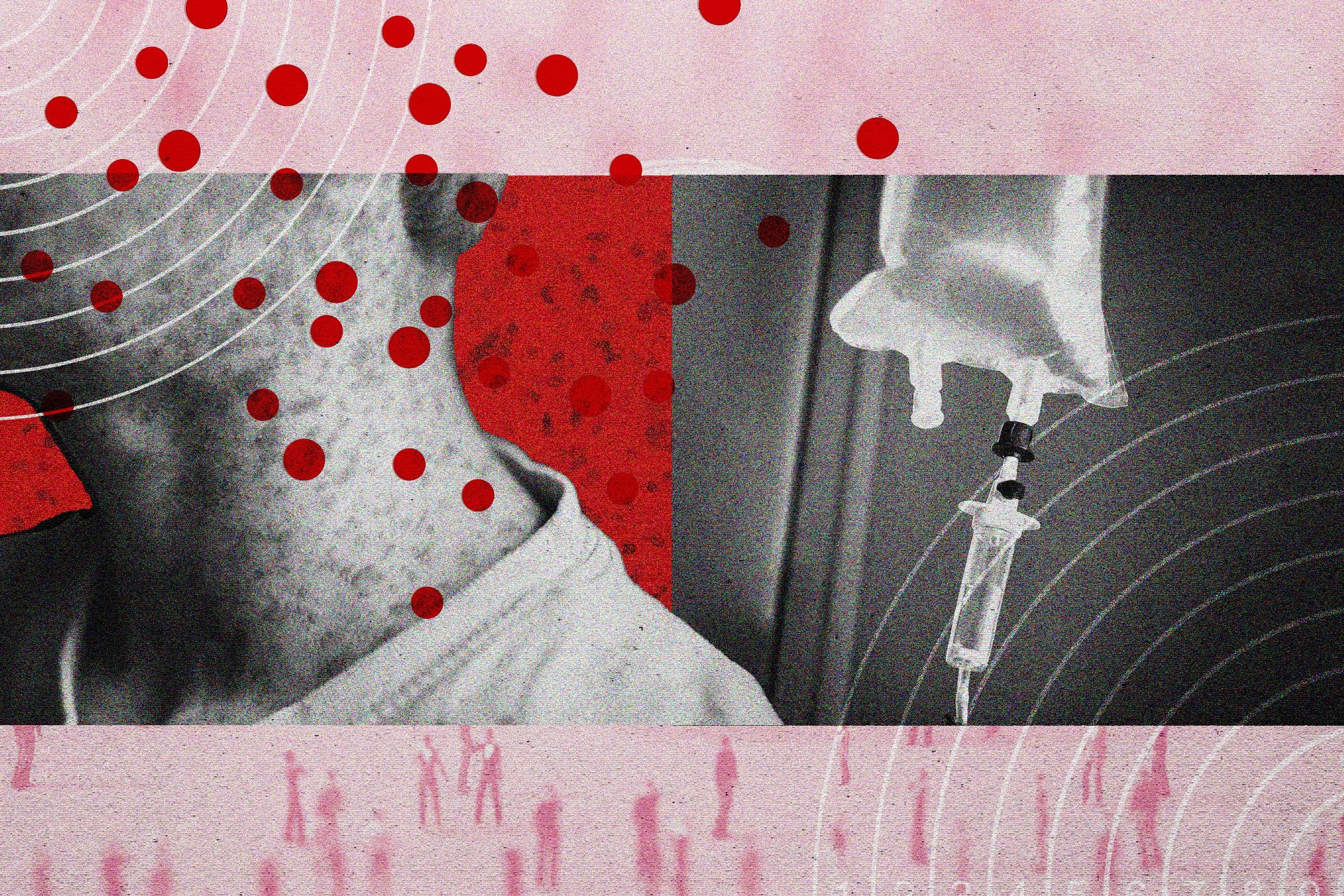
Up until recently, measles vaccination has been so effective that there’s been little medical or financial incentive to develop treatments for the disease. But as measles cases hit a 35-year high and vaccination rates continue to decline in the US, a handful of biotech companies and academic groups have started working on measles treatments for those infected with the virus as well as vulnerable individuals needing short-term protection. It will likely be years, however, before these countermeasures are available, and it’s even more uncertain if those who refuse vaccines would take such treatments.
Fueled by large outbreaks in South Carolina and Utah, the US had already surpassed last year’s 2,289 measles cases, and it’s only July. For comparison, there were just 285 cases in all of 2024. Because measles is so contagious, at least 95 percent of people in a community need to receive both doses of the measles vaccine to protect immunocompromised individuals and infants under 12 months old who are too young to be vaccinated.
But measles vaccination rates have dipped well below that in many places across the country. Young children are the most susceptible to severe complications from measles. The virus can cause pneumonia by damaging the respiratory tract lining directly and by suppressing the immune system, leaving them susceptible to bacterial infections.
It can also cause deafness and potentially fatal brain damage. Without a measles-specific treatment, doctors rely on supportive care such as preventing dehydration, managing breathing difficulties, and administering steroids for inflammation. Vitamin A is sometimes given to patients because the virus can deplete levels of it in the body, but the supplement has no effect on the virus itself.
“What we’re seeing now as we get a resurgence of measles in communities is a horrible lack of options when somebody gets exposed,” says Michael Mina, an epidemiologist and chief medical officer of Invivyd, a Connecticut-based biotech company. Invivyd is developing a type of therapy for measles known as a monoclonal antibody, which mimics natural antibodies the immune system makes to fight off disease. Given via IV or injection, monoclonal antibodies were widely used to treat and prevent Covid-19, especially in immunocompromised individuals who didn’t mount a strong immune response to the vaccines.
Their protective effects can last up to a few months. Invivyd, which developed a monoclonal antibody for Covid, has been getting inquiries from health care providers about when a similar therapy will be available for measles. In the event of a local measles outbreak, a monoclonal antibody could provide short-term protection to those at high risk of contracting the virus.
Invivyd has not yet tested its measles antibody in humans, but Mina says the company is compiling the data needed for the Food and Drug Administration to sign off on clinical trials. At the La Jolla Institute for Immunology, president and CEO Erica Ollmann Saphire has been trying to understand the human antibody response to measles. In May, Saphire and her team published a study describing human antibodies capable of blocking infection by binding to key sites on the measles virus.



Comentários (0)
Entre ou cadastre-se para comentar.