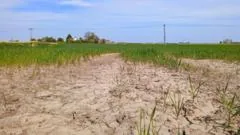
Is UK facing drought for second summer in a row? - Published Summer so far has been exceptionally hot and dry across much of the UK, with three widespread heatwaves and the longest run of dry days in central England since 1995. England, Wales and eastern Scotland have been the driest areas over recent weeks, and this follows a very dry spring in similar regions.
Very little rainfall is forecast through this week for most places, with only a few light showers possible, mainly close to coasts. As we head through the second half of summer, what are the longer range predictions, and are we heading into drought for the second summer in a row? How dry has it been?
Rainfall so far this summer has been below average across the UK as a whole, but there has been large regional contrast. Up to the middle of summer - 15 July - parts of eastern and north-eastern England had received just 26% of their total expected summer rainfall. Areas of northern and western Scotland had more than average for the first half of the summer, though.
For central England it has been the longest dry spell since 1995. Wisley in Surrey has seen 33 consecutive dry days. Comparisons are being made with last summer, when drought was declared across much of England, Wales and eastern Scotland.
It officially ended just four months ago. This year, drought has not developed as quickly because heavy rainfall recharged our aquifers, rivers and reservoirs during a very wet autumn and winter. However, the UK Centre for Ecology and Hydrology says flash droughts, external with a sudden transition between wet and dry conditions are "likely to happen more often, and be more intense".
When and where is any rain on the way? High pressure stays in charge for the rest of this week, meaning no significant rainfall for at least the next five days. We could see a few midweek showers especially near coasts in south-east England and East Anglia, as well as northern Scotland.
Through the weekend, rain-bearing weather fronts will try to move in from the north-west, but most of this rain is likely to fall across parts of Northern Ireland and Scotland. As the fronts push south, they may fizzle out, meaning little or no rainfall for the places that need it most, in the south and east. As for the rest of summer, it is too far off to know for sure, but there are hints that things could stay mainly dry and warm, especially in the south, although summer thunderstorms are possible.
Keep up to date with the latest forecast on the BBC Weather website or app. How will water industry and agriculture be affected? Due to the combination of prolonged dry weather and increased demand for water, hosepipe bans are in force for millions of customers in England.
River flows have decreased in recent weeks in England according to the Environment Agency, external, with 87% of catchments now at "below normal to exceptionally low levels". In Wales, where just 5% of July rainfall has fallen, Natural Resources Wales has moved the worst affected regions in the north and south-east into "prolonged dry weather status", the first step in its drought plan. Farmers and growers are "working around the clock to harvest crops which have come early, keep fruit and vegetables watered, and care for their livestock", according to Paul Tompkins, deputy president of the National Farmers' Union.






Comentários (0)
Entre ou cadastre-se para comentar.